Press F11 for fullscreen — ← → or Space to navigate — H for presenter controls
NFPA 350 WINDOW
15:00

How Fast is Your Rescue?

Using NFPA 350 for Safer Confined Space Operations
Alex Zielinski
NFPA Conference & Expo — June 24, 2026
The Problem

Georgetown, Colorado — 2007

Five workers killed. Three others injured. A confined space incident made worse by every failure in the system — poor emergency planning, unmanaged hazards, and a rescue response that never had a chance.

The local fire department hadn't been informed of the technical hazards. The nearest equipped confined space rescue team arrived on scene 90 minutes after the initial fire.

"The local fire department had not been informed of the technical hazards and the nearest equipped confined space rescue team arrived on site 90 minutes after the initial fire."

— U.S. Chemical Safety Board, Xcel Energy Investigation
5
Workers killed
90
Minutes to equipped rescue team
2
Minutes — what NFPA 350 requires for the highest hazard

The Gap Between Law and Guidance

OSHA 29 CFR 1910.146

The law. Tells you what must be done.

Requires a "timely" rescue — but never defines what timely means.

"What will be considered timely will vary according to the specific hazards involved in each entry."

— 29 CFR 1910.146(k)(1)(i), Note

This leads to the too-frequent industry answer to the need for rescue: "We'll call 911."

NFPA 350

The guide. Tells you specifically how to accomplish it.

Defines exact response times, team sizes, and hazard classifications. Fills the gaps OSHA leaves open.

Three-tier hazard response model with specific time benchmarks for each tier.

Minimum personnel requirements based on space conditions.

If OSHA tells you what needs to be done, NFPA 350 tells you how.

Before You Continue...

Does your organization have a written agreement with local industry or your fire department about confined space rescue?

Your answer is anonymous and adds to a running total. See how others have responded.

Yes
No
Not Sure

By the end of this review, you'll understand why this matters — and have the framework to start that conversation.

Recommended Viewing

The U.S. Chemical Safety Board investigated the Georgetown, Colorado incident referenced in this presentation. If you haven't seen their investigation video, it provides critical context for everything that follows.

If you're already familiar with this incident, continue to the next section.

Act 2

The Three-Tier Response Model

NFPA 350 classifies confined spaces into three rescue response modes based on hazards. The tier determines how fast your rescue must be.

TIER I

Low Hazard

No recognized hazards, but could require technical rescue if a worker becomes incapacitated.

5 min response
15 min entry

Timer starts on arrival

TIER II

Moderate Hazard

Non-life-threatening hazards requiring rapid intervention. Actual or potential hazards present.

12–15 min entry

Timer starts at incident occurrence

TIER III

Highest Hazard

Life-threatening hazards requiring immediate intervention. Actual or potential IDLH.

2 min entry

Dedicated team. No other duties.

All three tiers require a team trained to the technician level per NFPA 1670. The tier determines the speed, not the skill.

The Critical Distinction

When Does the Clock Start?

This is the detail that changes everything for the confined space owner choosing between a municipal fire department and an on-site rescue team.

Tier I — Clock starts on arrival

Your drive time is NOT included. 15 minutes to make entry begins when you arrive on scene. The fire department may be a reasonable option.

Tier II — Clock starts at incident

Your drive time IS included. 12-15 minutes from when it happens, not from when you arrive. A 7-minute response time leaves you 5-8 minutes to assess, set up, and make entry.

Tier III — 2 minutes total

There is no drive time. The team must be standing by, set up, and ready. Dedicated to this singular entry with no other responsibilities.

Consider: Your 15 minutes doesn't stop because you've arrived at the address.

The incident may require you to take equipment to a sub-basement or up several stories without an elevator. Your first apparatus might arrive in under 5 minutes, but that doesn't help the person stuck in the confined space waiting for your technicians who are fighting traffic across the city.
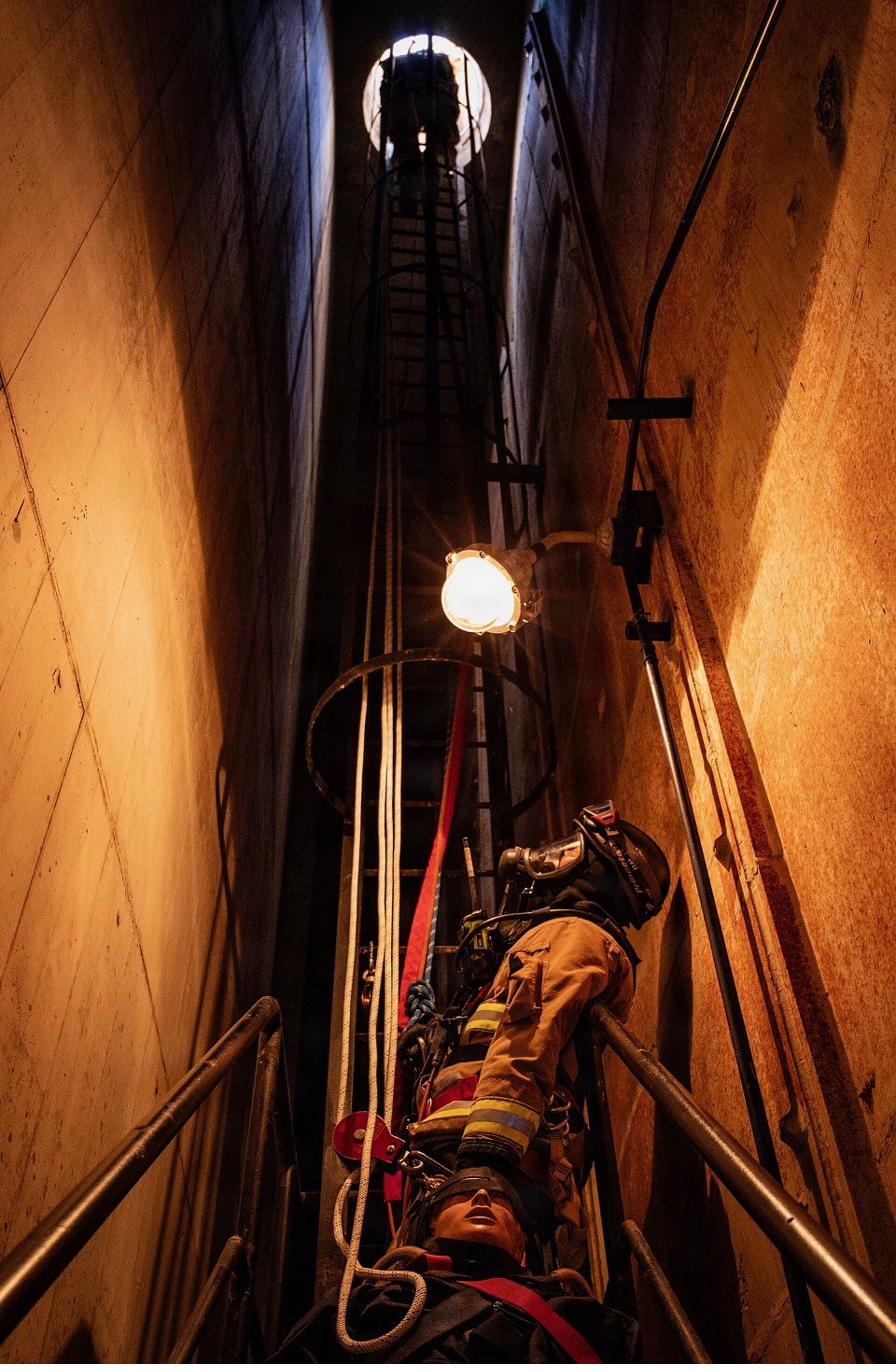
Deep vertical shaft requiring rescue

How long does it take to get equipment to the bottom of this space — and a patient back out?

Scenario 1

Classify This Space

The Space: Open Machine Pit

A below-grade open machine pit, 8 feet deep, with a fixed ladder for entry and exit. No hazardous atmosphere — the space has been tested and is clear. No engulfment hazards, no obstructions inside.

A maintenance worker must enter to inspect equipment. If the worker becomes incapacitated — a medical event, a fall from the ladder — they cannot self-rescue from the pit.

The space is clean, open, and has no atmospheric concerns. But the worker is 8 feet below grade.

GROUND LEVEL 8 ft Worker ▼ No atmosphere hazards No obstructions No engulfment Atmosphere: CLEAR
Scenario 2

Classify This Space

The Space: Aboveground Storage Tank

A three-story aboveground tank with a single entry point at the top. Inside: a three-story scaffold built around a central agitator shaft extending to the bottom.

The space has been properly controlled — hazardous contents have been purged and the atmosphere tests clear. No IDLH conditions. However, the internal scaffold, agitator shaft, and the single top-mounted entry create a complex extraction path.

Technical rescue would be required to remove an incapacitated worker around the agitator, up the scaffolding, out the opening, and down to the ground.

ENTRY AGITATOR SHAFT Level 3 Level 2 Level 1 ▼ Incapacitated ~36 ft Atmosphere: CLEAR Complex extraction path Obstructions present Single top entry only
Scenario 3

Classify This Space

The Space: Chemical Processing Vessel

A horizontal chemical processing vessel that could not be fully purged of its previous contents through normal process piping. A cleaning crew must enter to manually clean the interior before maintenance can begin.

Residual chemicals remain inside. The atmosphere has been ventilated but cannot be guaranteed to remain clear during cleaning operations — agitation of residual material could release toxic vapors at any time.

Think about this question: if a worker falls unconscious inside this space, is there anything else in the space that could harm them while they wait for rescue?
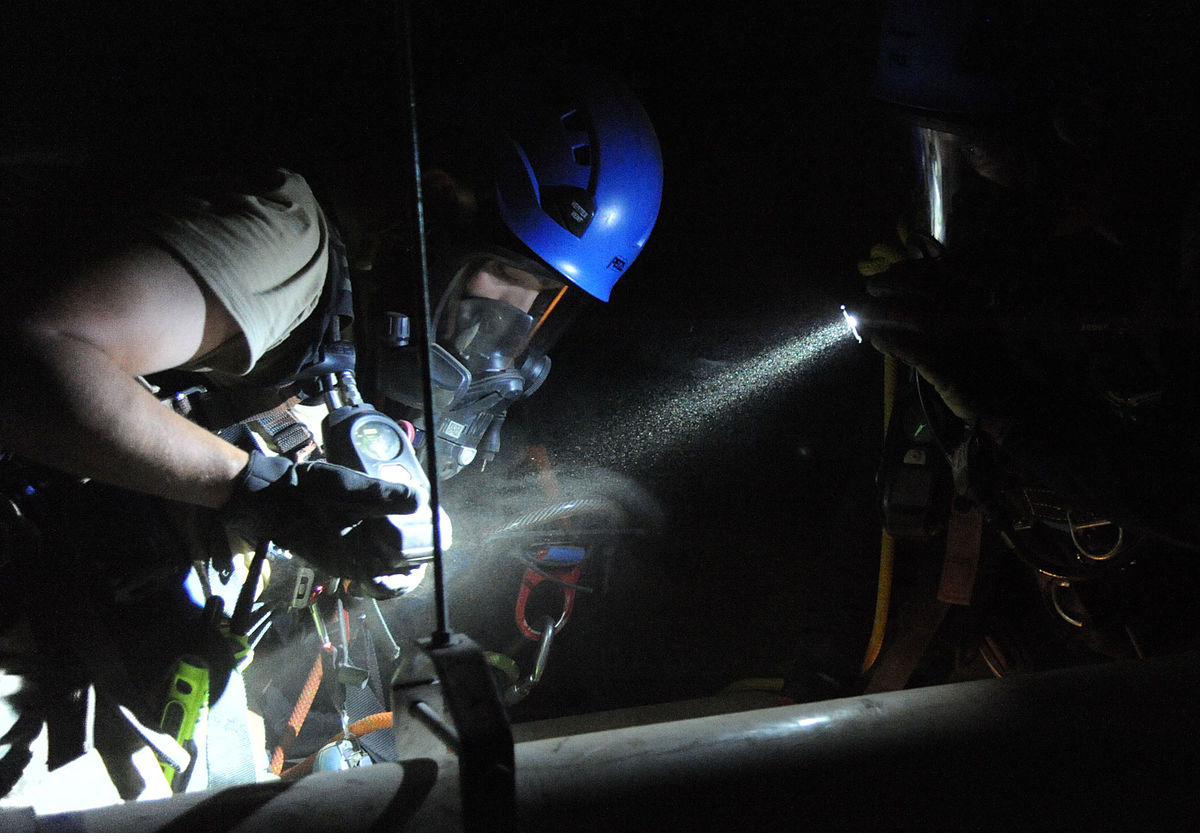
Inside a confined space with SCBA

If a confined space entrant became unconscious, is there anything else in the space that could harm them? Would the act of falling dislodge PPE and expose them to something immediately dangerous to life and health?

If the answer is yes — you are most likely working with a Tier III space.

The rescue team must be dedicated to this singular entry with no other responsibilities. Completely set up and capable of rescue entry within 2 minutes.

Callback

Georgetown Revisited

Now that you know the tiers — let's go back to Georgetown.

A hydroelectric tunnel. A fire inside the space. Workers exposed to the fire and its byproducts in a confined environment.

NFPA 350 requires for Tier III:

2:00

Setup and capable of rescue entry

Actual response at Georgetown:

90:00

Nearest equipped team arrival

The gap between 2 minutes and 90 minutes is the gap between rescue and recovery. Between planning and hoping. Between NFPA 350 and "we'll call 911."

Act 3

How Many Rescuers Do You Need?

NFPA 350 provides a staffing decision table based on the conditions of the space. As hazards increase, so does the team.

Space Conditions Personnel Required
No obstructions, no entanglements, entrant on retrieval system 1 — Non-entry rescuer
No obstructions, not on retrieval, no atmospheric hazards, no vertical extraction 3 — 1 Attendant + 2 Rescue Entrants
Obstructions present, not on retrieval, no atmospheric hazards, vertical extraction required 5 — 1 Attendant + 2 System Operators + 2 Entrants
Obstructions, not on retrieval, atmospheric hazards (SCBA), no vertical extraction 5 — 1 Attendant + 2 System Operators + 2 Entrants
Obstructions, not on retrieval, atmospheric hazards (SAR), vertical extraction required 8 — 1 Attendant + 2 Operators + 2 Entrants + 2 Backup + 1 Air Supply

Sourced from NFPA 350, 2022 — Table A.10.9.1 Confined Space Rescue Team Staffing Decision Table

Interactive

Build Your Rescue Team

Toggle the conditions of the space. Watch how the required team changes.

Entrant on retrieval system
Connected to a mechanical retrieval device
Obstructions or entanglements
Internal scaffolding, pipes, equipment
Potential atmospheric hazards
Toxic, flammable, or oxygen-deficient potential
Vertical extraction required
Rope/mechanical systems needed to raise victim
1
RESCUERS REQUIRED
1 Non-Entry Rescuer

The reality check: Many standby rescue contracts send just 2 people. Toggle "obstructions" on and "retrieval" off — the minimum jumps to 3. Add atmospheric hazards and you need 5. The most common industry setup doesn't meet the minimum for anything beyond the simplest space.

Reality Check

The Two-Person Problem

The most common standby rescue setup across industry: two people.

One to make entry, one to operate the rope system. This is the baseline many contract companies provide for a single confined space.

According to the NFPA 350 staffing table, two rescuers are only sufficient when:

The space has no obstructions, no entanglements, and the entrant is properly attached to a retrieval system.

Even then, the standard calls for one non-entry rescuer — not two making entry.

The moment the entrant disconnects from the retrieval system — to work around an agitator, to access a valve behind a pipe — the game changes. You've moved down the table, added people, and changed the team from non-entry to entry rescue.
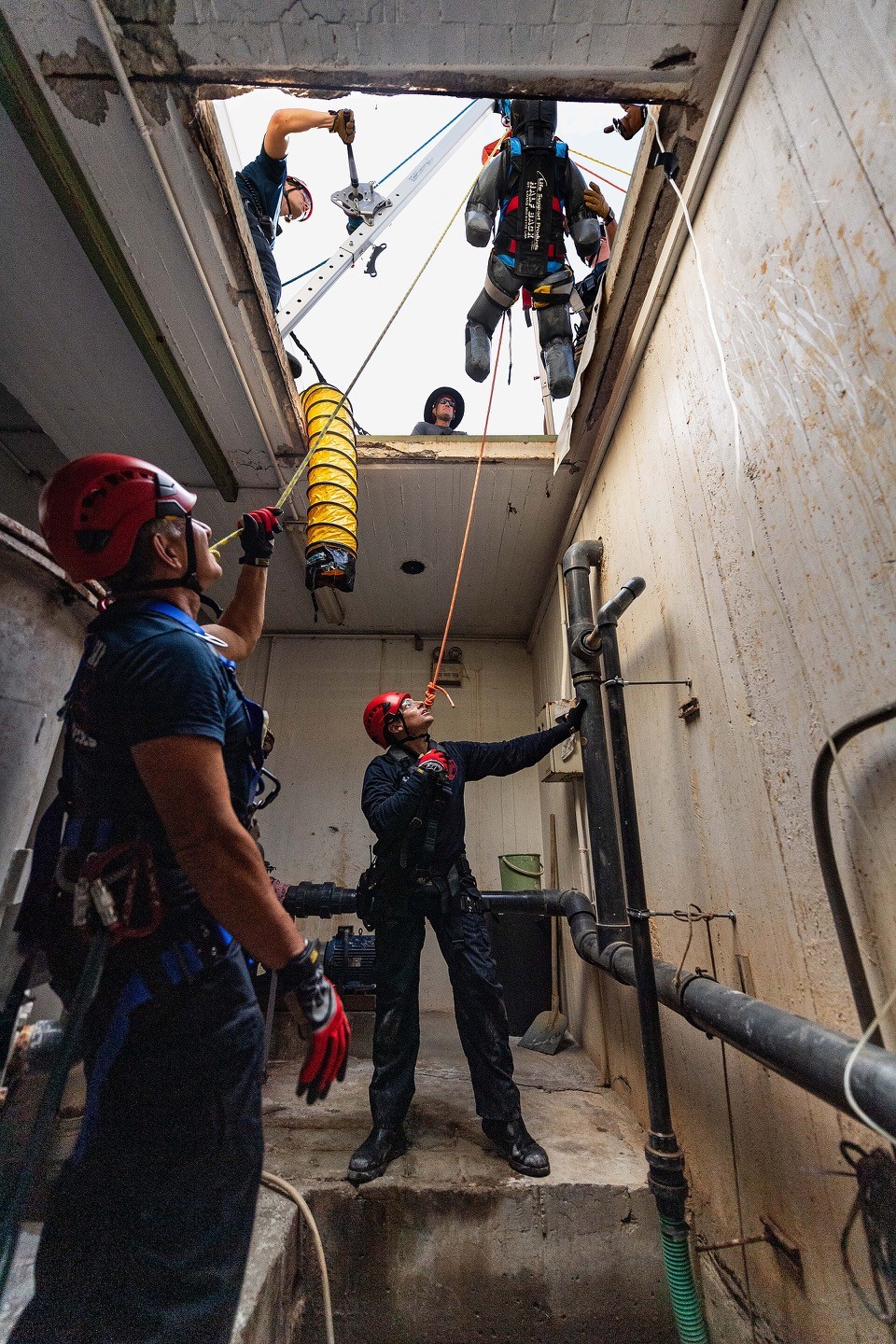
Complex confined space entry

How many people does it take to get a patient from the bottom of this space to the surface? One to operate the lowering system, two entry rescuers, a rescue attendant at the top, and you haven't even accounted for atmospheric monitoring or backup.

Act 4

Air Monitoring: The 4-Foot Rule

Many in industry test at "top, middle, bottom."

Three sample points for a space that could be 30 feet deep. That's one reading every 15 feet — with massive gaps where a stratified layer of toxic or oxygen-deficient air could exist undetected.

What the Standards Actually Say

NFPA 350, §7.3.10: The atmosphere should be tested at 4 ft (1.2 m) intervals starting at the opening of the space and working towards the bottom (vertical) or inward from the opening (horizontal).

OSHA 1910.146, Appendix B(4): When monitoring stratified atmospheres, the atmospheric envelope should be tested a distance of approximately 4 feet (1.22 m) in the direction of travel and to each side.

Both standards converge on the same interval. OSHA's is in non-mandatory Appendix B guidance. NFPA 350 makes it an explicit recommendation. Either way — "top, middle, bottom" doesn't meet the standard.
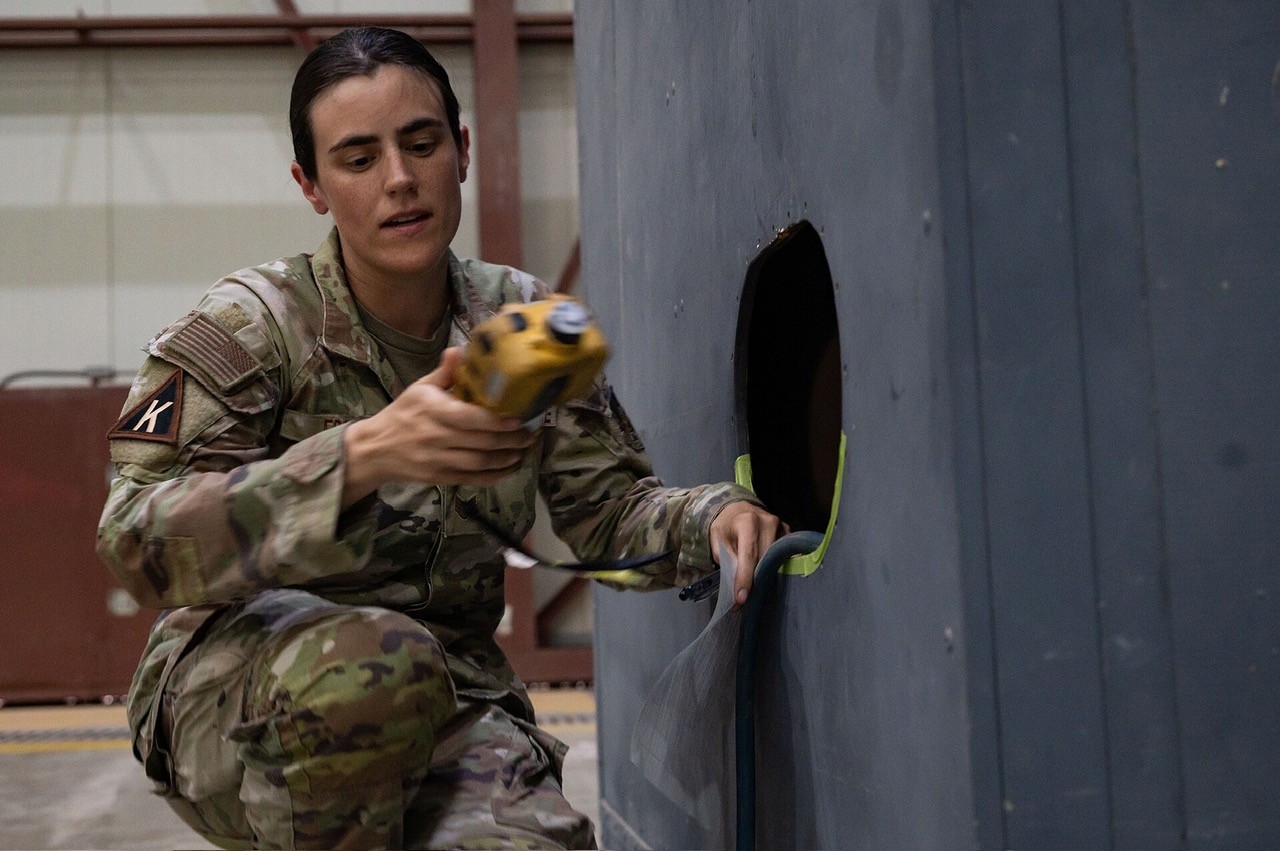
Air monitoring at confined space opening

24-Foot Vertical Space

Click to place your sample points. How many does NFPA 350 require?

CLICK TO SAMPLE
0 ft
4 ft
8 ft
12 ft
16 ft
20 ft
24 ft
YOUR COVERAGE
0
points sampled
Select sample points in the grid
The standard requires:
7
sample points
Every 4 ft from top to bottom
OSHA App. B & NFPA 350 §7.3.10
"Top, Middle, Bottom":
3
Misses 4+ potential hazard zones
Reclassification

When a Permit Space Isn't — And When It Is Again

OSHA allows a permit-required confined space to be reclassified as a non-permit space — if all hazards have been eliminated. This saves paperwork, but it does not eliminate the space.

"A history of confined space entry incidents indicate that the misuse of the reclassification procedures has resulted in injuries and death."

— NFPA 350, Annex C, Section C.2

What reclassification requires:

All hazards must be eliminated — not controlled, eliminated. Forced air ventilation to control an atmospheric hazard is not elimination. That's the alternate procedure under 1910.146(c)(5), which still requires monitoring and permits.

The reclassification is temporary — it lasts for the duration of the shift. Once all entrants have exited and the permit is closed, the space reverts to a confined space.

Even a reclassified space still needs a rescue plan. You've reduced paperwork, not risk.

The Reclassification Trap

A space is reclassified — all hazards eliminated. Paperwork is reduced. Workers enter.

Mid-shift, conditions change:

A process change in an adjacent space introduces fumes through a shared wall.

Or: weather changes create condensation that reactivates residual chemicals.

Or: work in the space itself disturbs material that was assumed to be inert.

The space is no longer hazard-free. But the permit was simplified. The monitoring may have been reduced. The rescue plan may have been scaled back.

Reclassification saves paperwork. It does not save people.

NFPA 350 recommends: reclassification should only be allowed after a formal risk assessment by a qualified person. If any hazards exist, or have the potential to exist, reclassification should not be used.

Act 5

Safer Through Collaborative Planning

No matter your role — you're part of this puzzle.

Industry might expect the municipal fire department to complete their rescue puzzle with pieces you don't have. The fire department might assume industry has a plan that doesn't actually exist.

What You Can Do Tomorrow

If you're fire service: Go look at the confined spaces in your area. Talk to the owners. Use NFPA 350 to evaluate whether your response time actually meets the tier requirements. Be honest about what you can and can't do.

If you're industry: Evaluate your spaces using the tier system. Right-size your rescue teams using the staffing table. Don't assume "call 911" is a plan — verify it. Time your team's response and compare it to the standard.

Both: Train together. Drill together. Understand what each side needs when the call comes. Discover the gaps now — not during the rescue.
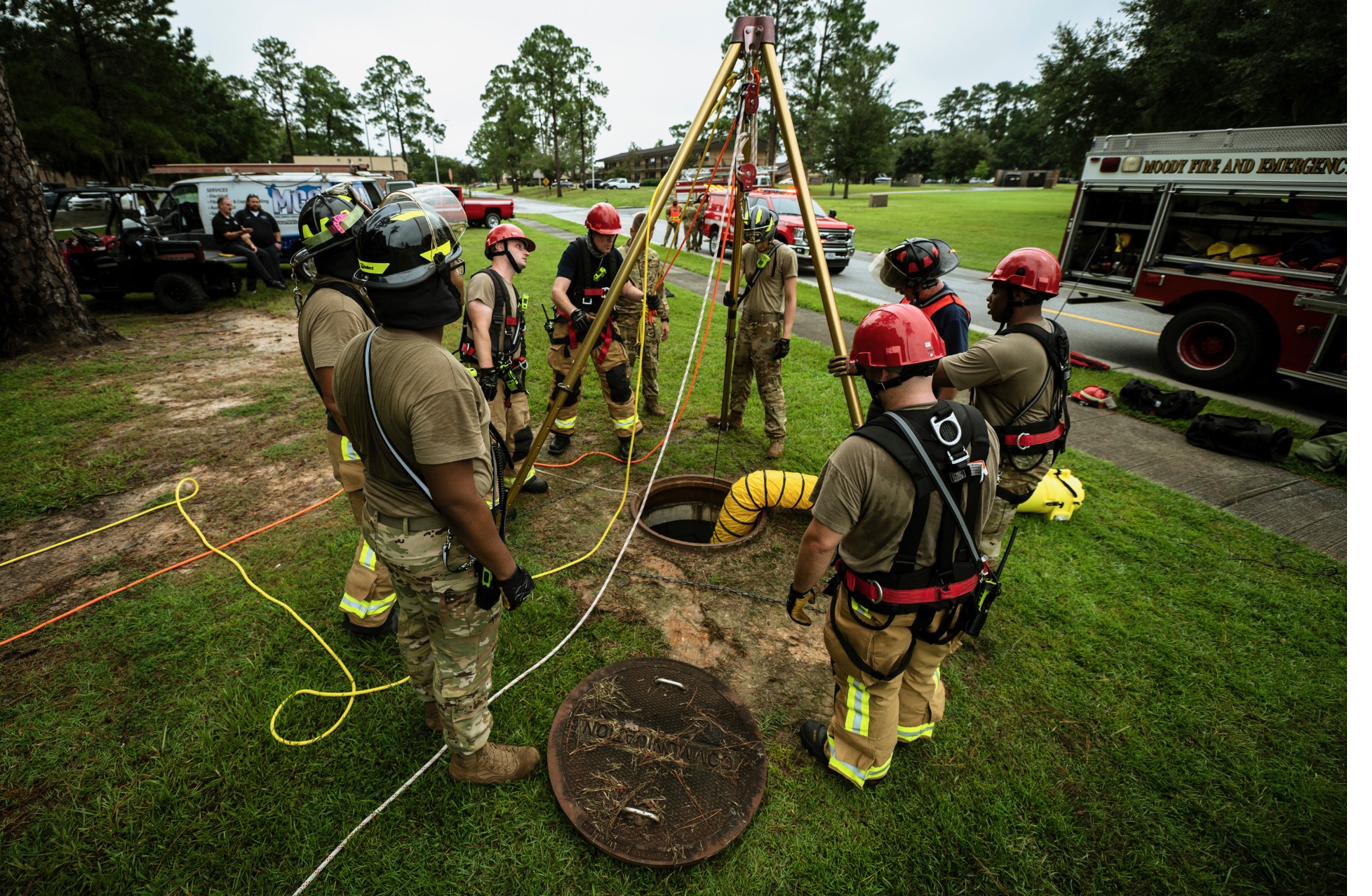
Full rescue team assembled

Better that a shortcoming is known and a viable option developed today, before they call 911 with the idea you can solve the confined space incident.

Solutions exist: contracted standby rescue teams, shared partnerships between local industry and public safety to purchase equipment and train capable responders, cross-training between facility teams and municipal departments.

Final Scenario

Put It All Together

The Scenario

A large food processing plant in your response area contacts the fire department. They have a silo — 40 feet tall, single top entry, internal auger system. They need workers inside for annual cleaning. Previous contents have been removed but residue remains on the walls.

They ask: "Can the fire department be our rescue team?"

Your station is 4.2 miles from the plant. Average response time: 7 minutes. Your technical rescue equipment is on a separate vehicle that responds from across town — 12 minutes.
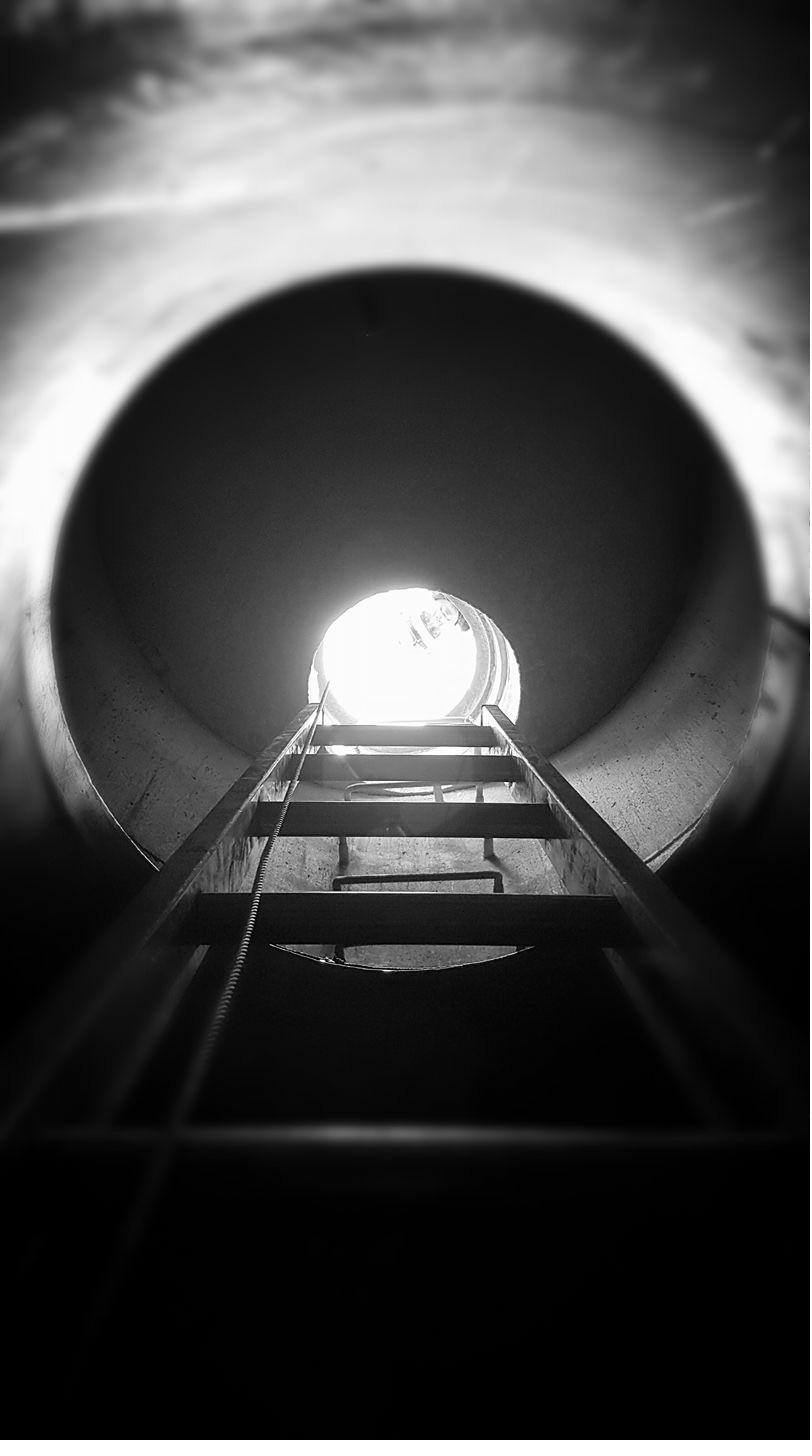
Looking up inside a vertical confined space

Key Takeaways

1. NFPA 350 Fills the Gaps

OSHA tells you what — NFPA 350 tells you how. Specific response times, team sizes, and hazard classifications replace vague language with actionable benchmarks.

2. The Tier Determines the Speed

Know the difference between 2 minutes and 15 minutes. Know when the clock starts. Know when 911 is enough — and when it isn't.

3. Right-Size Your Team

Two rescuers isn't enough for most spaces. Use the staffing decision table to match team size to actual conditions — not budget.

4. Plan Together

Fire service and industry are both pieces of the same puzzle. Open the dialogue. Discover the gaps now. Build the relationship before the emergency.

How Fast is Your Rescue?

The answer starts with a conversation.
Worker in space — awaiting assessment
OPENING
1/19