
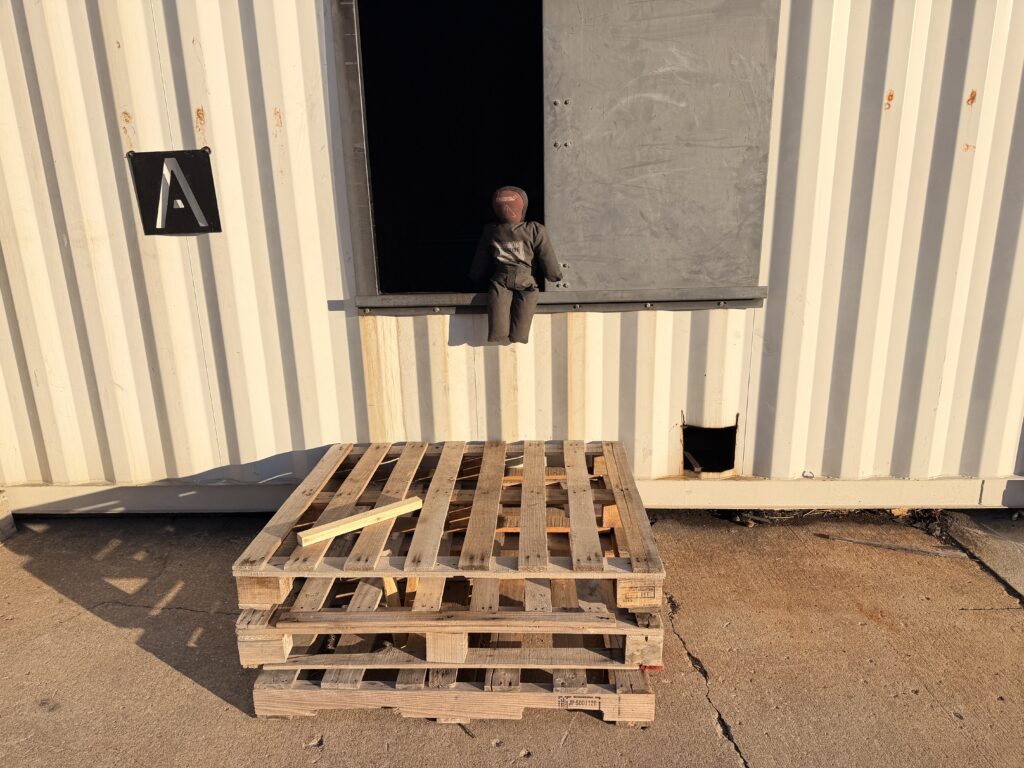
A rescue manikin sitting in a window sill on a Side A. Most of us look at that photo and the plan is simple. Pull them from the window, done. If it was a second floor, ladder, grab, done. One victim, found.
From Command to the firefighter, this is the moment to slow down for several seconds, make sure you aren’t falling victim to the tunnel vision or incorrect reports. At fires and hazmat scenes the number in our heads can impact the way we search and to what extent we search. Once we think we know how many people are inside, we start looking for that number. When the count matches, a search can slow down or stop.
The first find can hide the second
From outside the fire service there’s a term for this. Radiology has studied this problem for more than 50 years. They call it satisfaction of search: after one abnormality is found on an image, a second abnormality on the same image is more likely to be missed. Cognitive scientists now call it a subsequent search miss (Adamo et al., 2021).
The original explanation was simple. The reader found something, felt satisfied, and stopped looking. Later studies showed it isn’t that clean and readers often keep searching after the first find and still miss the second one (Adamo et al., 2021). Searching longer doesn’t guarantee seeing more.
One explanation fits our search work pretty closely. The theory shows that after finding the first target, people tend to look for more things that resemble it. A second target that looks different is easier to miss (Adamo et al., 2021).
Now put that in a fire building. Dispatch reports one person trapped. We find an adult at the window. The count matches and the picture matches. If someone else is in there, the research suggests we’re primed to look past them, especially if they don’t look like the person we just found.
Knowing about it isn’t enough
Simons and Chabris (1999) asked observers to count basketball passes in a short video. Partway through, a person in a gorilla suit walks through the scene. Roughly half the viewers never saw it even though once you know about it you’d find it impossible to miss!
Simons (2010) later tested people who already knew about the gorilla. They spotted the gorilla, but they were no better at noticing other unexpected events in the same video. Typically they noticed fewer.
This matters for training. A crew that’s heard “there’s always another victim” can still miss one. Awareness helps. It doesn’t replace a search method that forces you to cover the whole space.
Who gets left behind
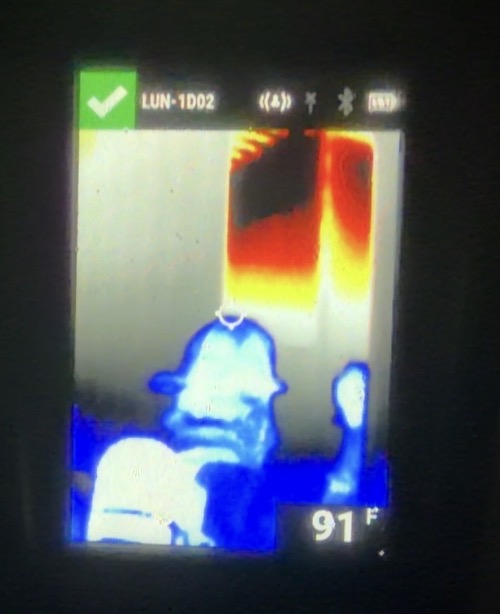
When we assume a number, a location, or a body size, there are people who fall outside that mental picture.
- Children. Scared and confused children often hide where they feel safe, such as a closet or under a bed (Nationwide Children’s Hospital, n.d.). They’re smaller than the adult we pictured, and they may not answer when we call.
- People who don’t look like a victim. A worker in coveralls or chemical protective clothing, someone curled in a bathtub, someone wedged behind equipment: If we’re only scanning for the shape we expect, these shapes are easier to miss.
- People who already left. At hazmat scenes, victims don’t wait for us. After the 1995 Tokyo subway sarin attack, St. Luke’s International Hospital evaluated over 700 patients. Only 64 of them arrived by ambulance. Another 40 to 50 were directed by firefighters and took buses, and the rest came by car and on foot (KAMEDO, 1995). A count built on who EMS transported would have missed most of them.
- People in the next space. The adjacent room, the next unit, the building downwind are part of that scene. Our size-up can’t stop at the edge of the problem we were dispatched to.
Let the space set the count
None of this requires new tactics. It only takes discipline about what we’re looking for, where we’re looking, and when we’re allowed to stop.
- Treat the reported number as a minimum. Dispatch, a bystander, or an office building’s badge-reader roll call gives you a starting point. It doesn’t close the search.
- Finish the assigned area before calling it clear. A find in the first room doesn’t clear the rest of the floor. Make the hand-off and keep searching.
- Ask who left. Early at a hazmat incident make sure to communicate with nearby hospitals that self-presenting patients are possible, and find out what they’re seeing.
- Change the victims in training. Use child and infant manikins. Report one but position three. Put them in closets, under beds, behind equipment, and in PPE. Run drills with zero victims, one, and three or more. Don’t tell the crew the number.
- Debrief the stop point. After every search drill, ask one question: how did we know we were done?
Try it with your crew
Stage a scene and ask for a size-up. Then ask how many victims they expect and where they’d look after the window. If you can’t get out of the fire house you can create a variety of realist scenarios in Fireground Theater.
It’s never just one until the space proves it.
Stay Updated
If you’d like to be informed when project updates occur and when training material is released, use this form
Sources
- Adamo, S. H., Gereke, B. J., Shomstein, S., & Schmidt, J. (2021). From “satisfaction of search” to “subsequent search misses”: A review of multiple-target search errors across radiology and cognitive science. Cognitive Research: Principles and Implications, 6, 59. https://doi.org/10.1186/s41235-021-00318-w
- KAMEDO. (1995). The sarin disaster in Tokyo: A preliminary KAMEDO observer report [Abstract 146]. Prehospital and Disaster Medicine, 10(3 Suppl.). https://doi.org/10.1017/S1049023X00500533
- Nationwide Children’s Hospital Center for Injury Research and Policy. (n.d.). Fire safety for children. https://www.nationwidechildrens.org/cirp-fire-safety-for-children
- Simons, D. J. (2010). Monkeying around with the gorillas in our midst: Familiarity with an inattentional-blindness task does not improve the detection of unexpected events. i-Perception, 1(1), 3–6. https://doi.org/10.1068/i0386
- Simons, D. J., & Chabris, C. F. (1999). Gorillas in our midst: Sustained inattentional blindness for dynamic events. Perception, 28(9), 1059–1074.